The Grief of Your Own Death
Where spirituality meets real life change.
Dovile
4/17/2026

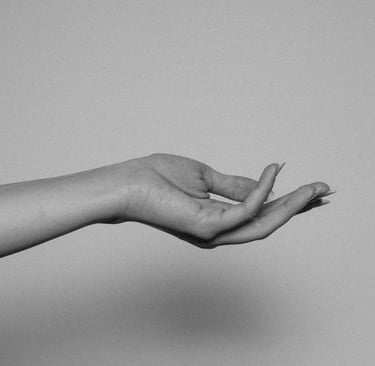
I don’t feel like it’s talked about enough—those threshold moments when you die. And yes, I mean moments, because I believe we die multiple times during our lifetime. Some die twice, some die eight times, but each time the pain and the sense of loss is real and significant. You don’t bury your body or your flesh, you bury your visions, your traditions, the trajectory you thought your life would take. You bury the idea of you—what you enjoy, who you are, what moves you in life. And with that often comes a quiet loss of people as well, friends you suddenly have nothing in common with anymore, even though they are the same ones who once surrounded you every day.
The faces and places you used to love slowly begin to feel distant, almost cold. The routines that once brought comfort lose their meaning, even the food you would turn to after a difficult day feels strangely empty. But what shifts the most are your desires. The goals you had for yourself, the plans you carefully built for your future, no longer satisfy you. And that is when the mind steps in—the part of us that tries to solve everything—asking the same question over and over again: What is wrong with me? The place hasn’t changed, the faces still look the same, just slightly older, but they have aged with you. So why does everything feel so different now?
And then, at some point, you realise that nothing around you has changed. It was you. You are the one who no longer fits into your old life, into the story you once believed would carry you until the end. It is like your favourite pair of shoes from childhood. One day, you notice they no longer fit properly. At first it is just your big toe pressing uncomfortably, then the second, until eventually it becomes unbearable to wear them. And yet they are still your favourite—still beautiful, still familiar, still something you loved for so long. But they are no longer yours. And the pain of letting them go cuts deeper than you expect, because this time it is not just something external. It is your identity, your place, your home, your relationships—it is you. So the questions begin to surface: where do I belong, what do I enjoy, what is actually mine now?
It feels like stepping out of your old body into a new one, but the transition is not as spiritual or graceful as people imagine. It can be brutal, confusing, filled with fear and uncertainty, because no one ever gives you a manual for this kind of change. And we live in a world that values stability and structure, where consistency is seen as something to strive for, so the idea of leaving behind everything familiar and building something new can seem irrational, even to yourself. But what kind of life are you building if your understanding of what is possible is limited only to your past and what you have already seen? How do you create something when you don’t even know what exists yet? How do you trust that you will find your way without getting lost?
For me, the only way to make sense of it is to look at my own life. There was a time when I went from being a data scientist to becoming a psychic medium within a few years. I did not believe in any of it, nor was I consciously looking for it. And yet it happened, and now I am living a life I could have never imagined before, a life that brings me more love and purpose than I thought I could hold. That alone shows me that not everything needs to be understood in advance in order to exist.
And now, once again, I am changing, and once again, I am grieving. But this time, what I grieve the most is the past version of me. Because I knew her. I knew what she liked, what she enjoyed, how she took her coffee, what she struggled with every day, and which places she called home. I knew her joys and I knew her pain. She was mine, and she belonged to me for so long that being her became almost automatic, like muscle memory.
But at some point, she became like those shoes—the favourite ones from childhood. And suddenly, she feels foreign. And the pain comes in waves, especially when she visits me in memories, reminding me that things once felt simpler, clearer, more certain. And maybe that is the hardest part of all—not just letting go, but knowing that what you are letting go of was once so deeply yours.
But I am beginning to understand that this grief is not here to punish me, nor to take something away without reason. It exists because something mattered. Because I lived it fully, because I loved it, because it shaped me into who I am now. And perhaps these versions of me are not meant to disappear completely, but to remain as quiet layers within me—no longer leading, but still present.
So maybe this is not just an ending, even if it feels like one. Maybe it is a transition I cannot yet fully see, a space in between where nothing feels certain, but everything is quietly rearranging itself. And even if I don’t yet know who I am becoming, I know that I have survived becoming before.
And for now, that has to be enough.
With deep love,
Dovile